“Making Friends is an Art”
Fall 2022 Note:
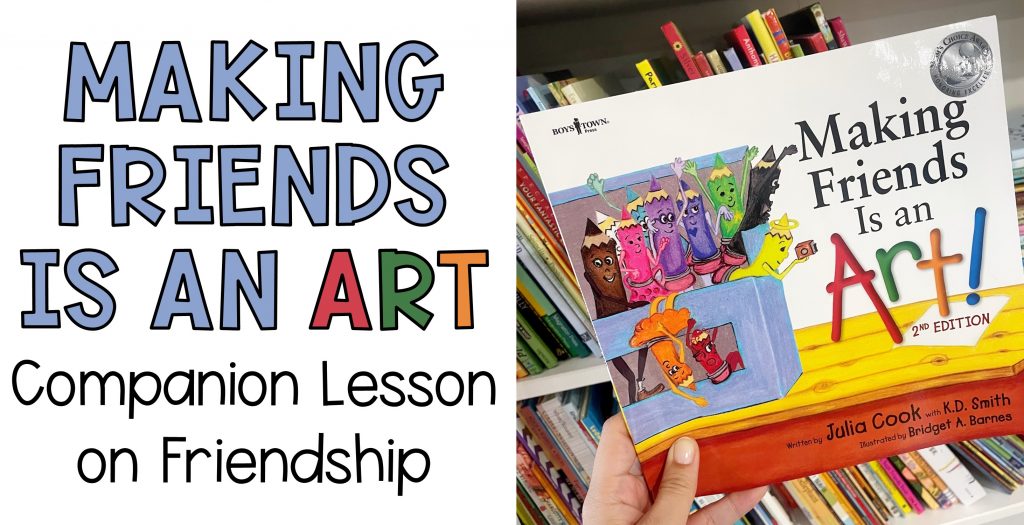
I first read and used Making Friends Is an Art in 2017. I appreciated that the focus was mostly on what TO do versus what NOT to do. At the time, it was hard to find books like this. In this first edition of the book, the brown crayon is initially friendless and displays some negative traits (such as being whiny). While my mind in no way connected this to people with brown skin/BIPOC, some other people saw this as a clear case of implicit bias. I admit I had a tough time accepting this as even a possibility and addressed this legitimate concern very poorly when initially writing this blog post so many years ago.
Thankfully, author Julia Cook really listened to the feedback about her book and she re-wrote the story. I listened to more feedback as well. This blog post has been updated to reflect the changes to the story, as well as changes made to the lesson.
I considered just deleting the entire post, but it felt wrong to just try and erase my mistakes, so instead I decided to edit the post and add this note.
Making Friends Is an Art Lesson
According to the biweekly SEL survey teachers have been completing, almost all of my 3rd grade homerooms have met their SEL benchmark for the year. This allowed me to tailor our most recent rounds of lessons to the specific needs of each class. One of these was friendship and social skills. Julia Cook’s Making Friends Is an Art was a great fit for this because it focuses on specific positive friendship traits as well as some specific examples of them. While the 1st edition of the story also had some story elements of a character pushing others away with more negative behavior, this 2nd edition has been updated to remove implicit racial bias and focus on more positive traits overall.
Before starting the story, I say “This story is about the different ways that we can be good friends to others. The main character is Brown – why do you think that is? What do we know about mixing colors?” This leads into some hypothesizing about how Brown may have the traits of others. I think with some classes of kids, it’s also important to explain how in this book, the author uses the word “talents” to describe the ways characters are good friends. We usually think of talents as being more artistic, academic, athletic, etc. Some students benefit from pre-teaching/scaffolding that a talent can also be social and more like what they think of as character traits.
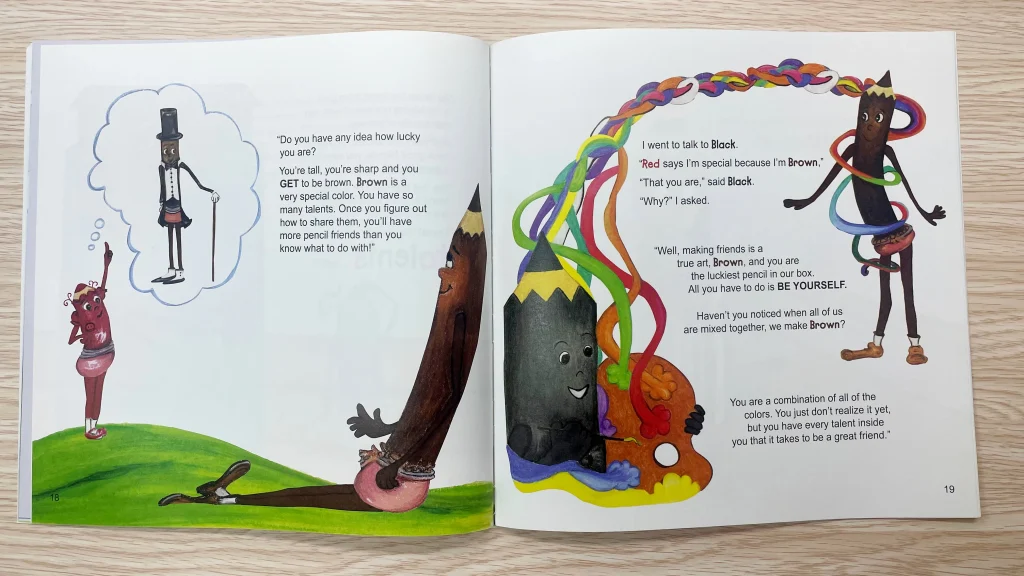
These are some of the comments/questions I ask as I’m reading it:
- (p. 10) Turn and talk with a partner. What were two of the friendship talents Brown said his friends had?
- (p. 17) What does Red mean when she says “to have good friends, you need to be a good friend”?
- (p. 23) What are putdowns? What does it mean to put someone else down? Why would Brown say he would never use putdowns?
- (End) What were some of the ways Brown used his talents to be a good friend?
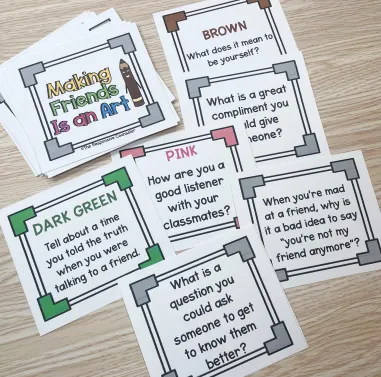
The book serves as a hook and a model for these different friendship talents. The way I like to chunk my lessons, I also needed to include a way for students to practice the skill and ideally self-reflect as well. To do this, I created task/discussion cards to go with the story. About half are specific to the colored pencils (and their traits) in the story and half are general friendship skills. We used these for an activity called Ask, Ask, Switch. A super simple description of that activity is this: Students mingle around the room finding partners and take turns reading their question/prompt and responding. After each pair finishes each of their turns, they trade cards and find new partners. I’m thinking I’ll probably re-use these cards in small groups, since many of my groups include friendship skills.
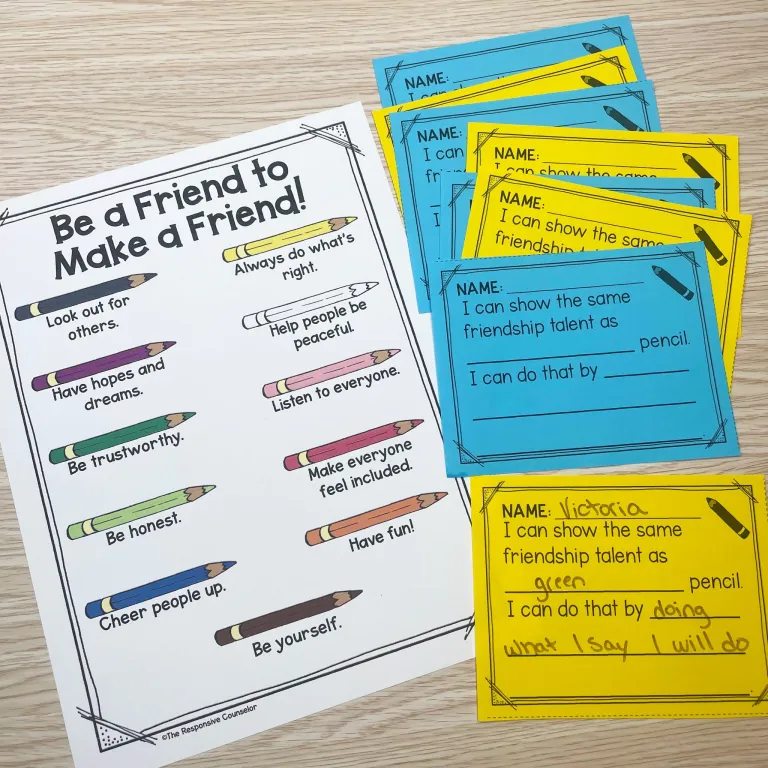
The lesson ends with an exit ticket asking students to self-reflect on which pencil’s friendship trait they can show. It also gives them the chance to write HOW they can show it.