Restorative Practices in Elementary Schools
Restorative practices in elementary schools focus on building relationships, repairing harm, and holding students accountable with high support. Learn the core beliefs, the SEL skills that support them, and practical strategies like circles, I-statements, and informal conferencing.

Key Takeaways
- Restorative practices are both a mindset and a set of strategies rooted in building and repairing relationships.
- The goal is high control AND high support: accountability without shame or punitive punishment.
- Elementary students may need explicit SEL lessons to fully engage with restorative practices.
- Circles and restorative questions are simple, powerful tools you can use proactively and responsively.
Restorative practices are ALL THE RAGE and while I’m typically critical of the latest trends in education, I love restorative practices and encourage everyone to jump in. The truth is that most school counselors will find themselves really connecting with all of the ideas about restorative practices in elementary schools. The tricky part is figuring out how to adopt restorative practices in elementary schools. Adapting them is made harder by the fact that most books and trainings are written for secondary settings.
Hold onto your hats, y’all. This is a long post! I tried to be comprehensive and provide information for teachers and counselors alike as you start or continue in your journey to use restorative practices in elementary schools. And if you’re looking for an easy way to share this information and more with your faculty, I created a Restorative Practices Faculty Training Presentation.

What Are Restorative Practices?
Restorative practices are a mindset, a set of beliefs about why people choose positive behavior and the power of relationships. Restorative practices are also a set of strategies schools can use. They are rooted in repairing harm and building and repairing relationships. And restorative practices value student empowerment. This student empowerment also serves to develop intrinsic motivation, something I know we’re all seeking to do.
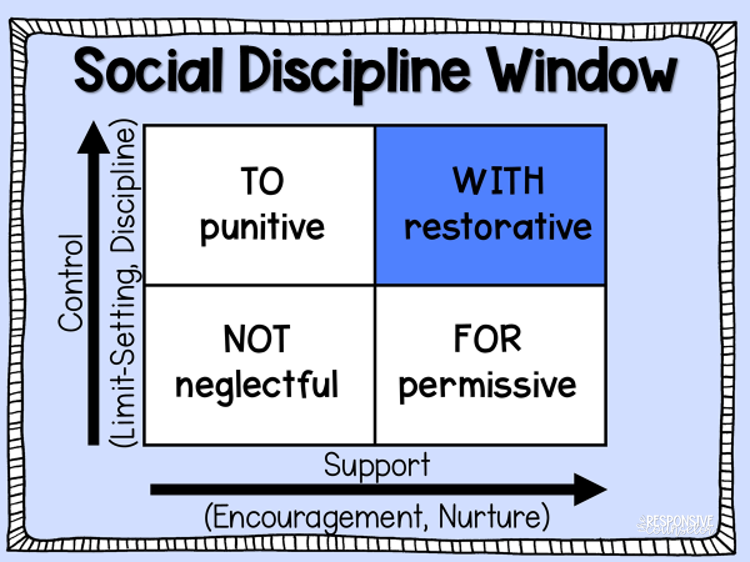
The social discipline window, developed by the International Institute for Restorative Practices, categorizes discipline based on levels of CONTROL and SUPPORT. Neglectful discipline occurs with both low control and support, punitive discipline arises from high control but low support, and permissive discipline features high support, but low control. The ideal approach combines high control and high support, creating an environment that holds students accountable to high expectations while offering the necessary support for their achievement – that is restorative practices.
Restorative practices are NOT an “instead of”. They work hand in hand with trauma-informed practices, with social emotional learning, and even with PBIS. Restorative practices are also not about letting students “get away” with things. Student accountability and responsibility and consequences are still present, but shame and punitive punishment are not.
In traditional discipline, the focus was on asking “what rule was broken?”, “who did it?”, and “how should they be punished?”. Restorative practices asks about who was harmed, how they were harmed, and what needs to happen to fix it. Traditional discipline says: “I found this pair of headphones that were broken! Someone snapped them. Who did it? They are going to have some consequences for this!” When using restorative practices in elementary schools, we might instead say, “This pair of headphones was broken. Now not as many people can use our listening center. I need to talk to the person who did it so we can try to make this better.”
Building Relationships and Repairing Harm
In the context of restorative practices in elementary schools, relationships and community play a vital role. There are lots of ways to build relationships between faculty or staff and students and this probably comes naturally to you and is important to you as well. Building relationships between students is just as important! Here are some ideas for doing that:
- Intentionally finding and naming commonalities. You can do low-pressure activities where students share information about their interests and disinterests. Ask students to find classmates they have things in common with. You can point out positive or neutral things you see as similar between students.
- Having shared fun experiences also promotes relationship development. When you do a messy science project together, when you do a silly brain break, when you do a lesson outside…doing things together as a class that make students smile and laugh, you’re helping them to connect.
- Facilitating discussions and activities with your class where they create goals, class expectations, or future visions together, you’re building class relationships. When people are working together towards a common goal, there’s something called “positive interdependence” that occurs.
- Even upper elementary students are not too old for show and tell. It’s a way to share about parts of themselves that they may not ordinarily get a chance to.
- Changing up the seating plan also serves to build relationships between students because they have the chance to connect with more of one another.
When a student has engaged in inappropriate behavior or not followed the agreed upon expectations, the focus turns to identifying and repairing the harm. Asking WHO or WHAT was harmed or wronged, and then taking action. Harm can be repaired through: apologies, cleaning up, providing help, giving positive/kind words, or redoing the action/behavior correctly.
Social Emotional Skills
Restorative practices absolutely serve to help students develop important social emotional skills. And at the same time, especially when engaging with restorative practices in elementary schools, students need some social emotional skills in order to really engage with restorative practices. Most books and articles and videos on restorative practices are focused on the secondary level and just assume that students already have some basic social skills mastered. The truth is, elementary kiddos don’t. Using the practices will help develop them, but it may also be the case that your class needs some lessons or practice with these skills explicitly in order to really engage with and understand them.
These are some of the skills that are part of restorative practices. On the one hand, this sounds like extra work for you as already super busy teachers. On the other hand, these skills will make your students better learners and better citizens, so they’re incredibly helpful outside of restorative practices, too.
- Identifying Feelings in Self and Others
- Expressing and Regulating Feelings
- Responsibilities in the Classroom and School
- Taking Responsibility For My Own Actions
- Choices and Consequences
- Peaceful Conflict Resolution
- Apologies and Forgiveness
- Perspective Taking and Empathy
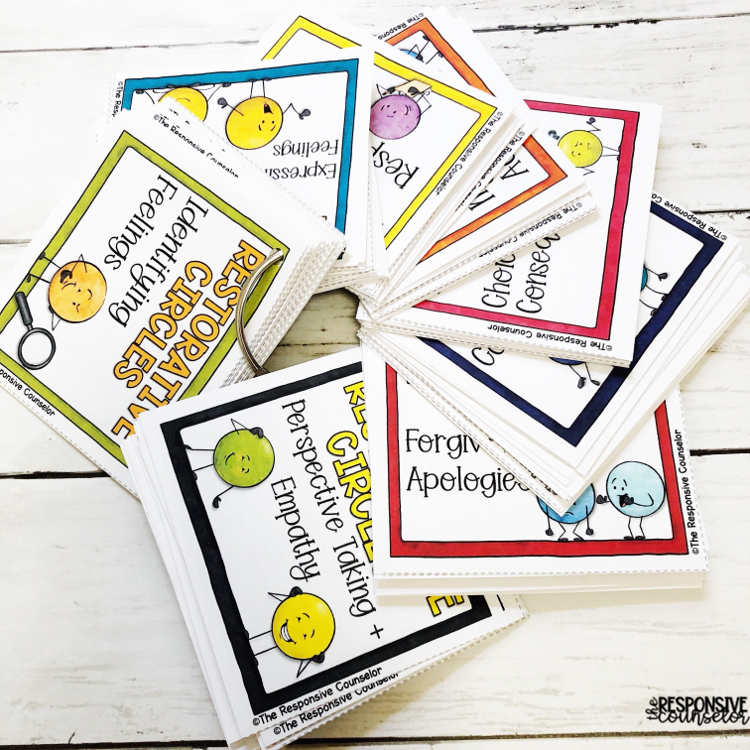
Knowing the importance of circles (read below!) and thinking about how educators can help embed these SEL skills even further into their day, I created a set of questions/prompts for elementary educators to use in community circles, morning meetings, etc.
I-Statements
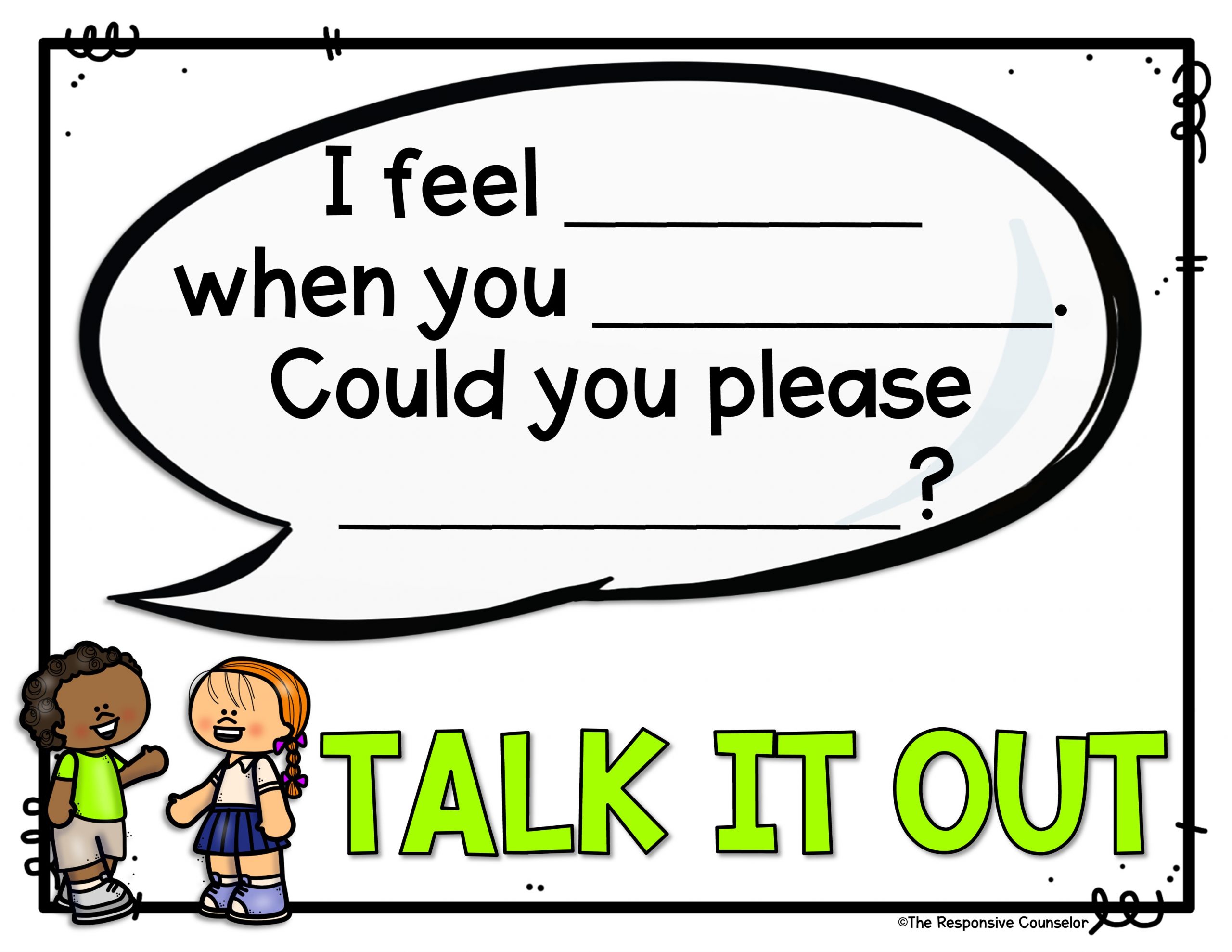
One of the social emotional skills really elemental to restorative practices in elementary schools are I-statements/I-messages, which are called “affective statements” in the RP world. This is how adults and students alike can share their feelings and needs, while those around are developing empathy. I’ve written about teaching students how to use I-statements a few times before, here and here. I-statements are incredibly helpful in both developing AND repairing relationships.
The Power of Circles
Circles are incredibly powerful. When people sit or stand in a circle, there is an increased sense of equality, shared responsibility, ownership, safety and trust, and connections. And the best part, is that circles can be used in so many situations when adopting restorative practices in elementary schools. Proactively, responsively, for academics, for social-emotional skills…all the things. Any time you have the kiddos sitting on the rug facing you, sit in a circle. Small change, big impact. They are a huge component of restorative practices.
There are three main models for circles: the sequential model, where each person takes turns answering or commenting, ideal for equal participation and short responses; the non-sequential model, where participants raise their hands to speak, suitable for longer responses or when not everyone needs to share; and the fishbowl model, where a few students discuss in the center while others listen from the outside.

Informal Conferencing
Informal conferencing is something you are probably already doing, but there is a specific language to use as a part of restorative practices in elementary schools (see in the picture below!) It can also be hard to remember these questions in the moment, so I made classroom posters for my teachers to hang as well as reminder cards for their lanyards.
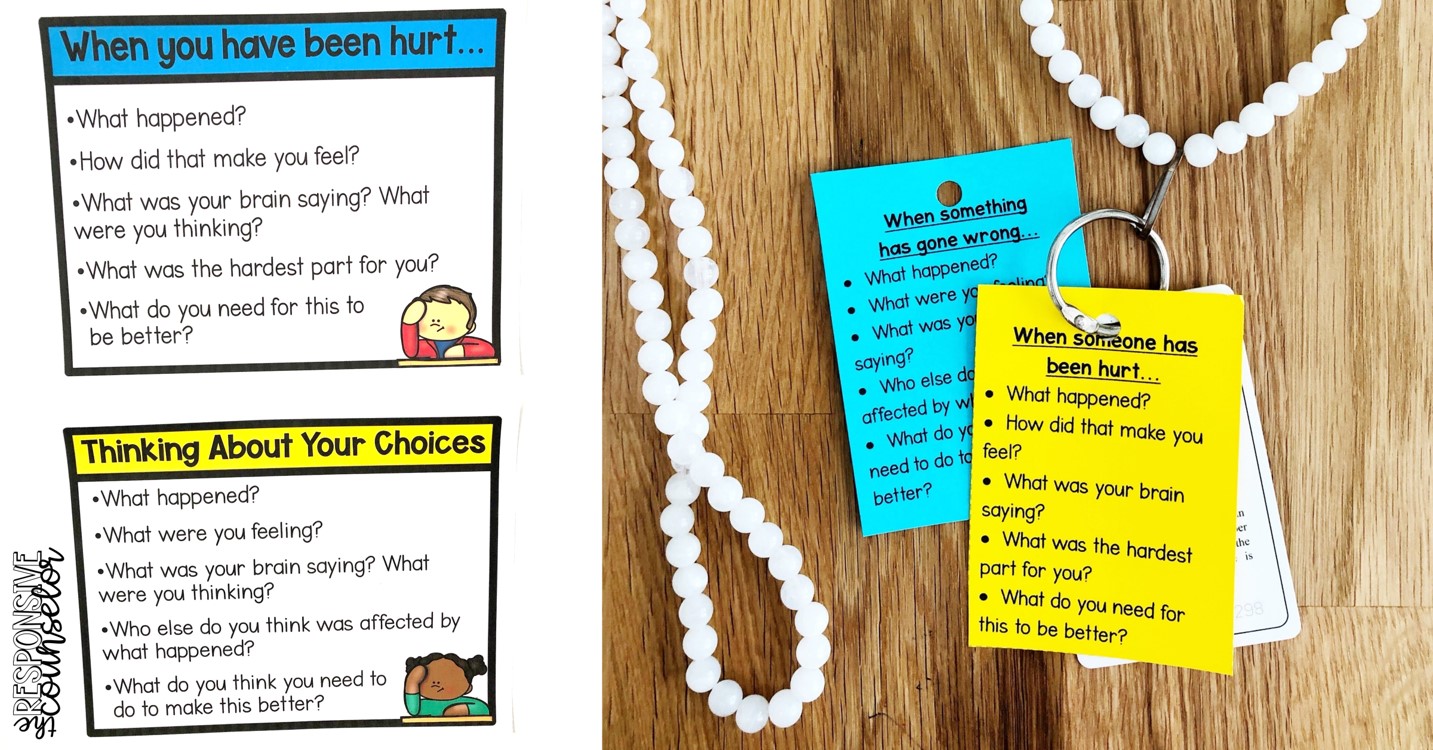
This type of conferencing is great for minor misbehaviors that don’t respond to your usual tricks of the trade: redirection, proximity, etc. It’s having a quick, private chat with the wrongdoer. You can tell them to meet you at the doorway, or you can bend down at their desk, or invite them to your desk. I also encourage putting just as much emphasis on the person harmed because when approaching issues through restorative practices in elementary schools, we prioritize repairing harm and promoting strong relationships.
If we see someone push someone else in line waiting for the bathroom, it is most of our first instincts to address the pusher first. Using a restorative mindset, our concern is first and foremost with the person being pushed. We check in with them first to make sure they’re alright, and to demonstrate concern and empathy.
With as important as informal conferencing is, it can be challenging to consistently do this for two reasons:
- Some students, knowing that they’ve done something wrong, shut down a little, and struggle to verbally process what happened.
- Time! If you’re in the middle of providing direct instruction to students, you can’t always stop and conference.
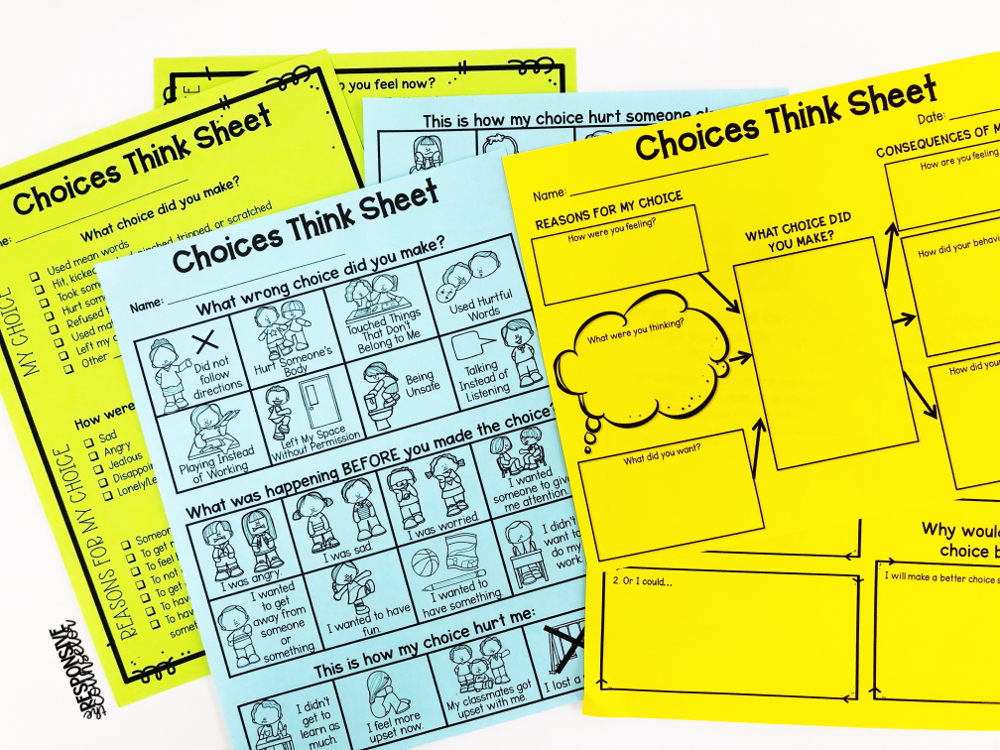
Something I did, first to tackle problem #1 and then to tackle problem #2, was create restorative question “think sheets” to use when a student has engaged in an inappropriate behavior. It gives them a chance to process independently with less pressure. They’re also helpful for teachers to give students when they can’t conference with them right away, but they want the student to start thinking about things while it’s still fresh on their mind.
I hope this rundown of restorative practices in elementary schools was helpful for you! Where is your school at on the journey towards using restorative practices?