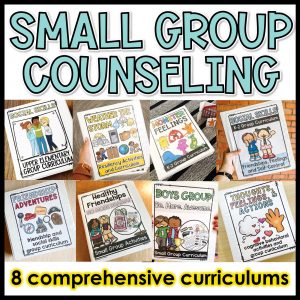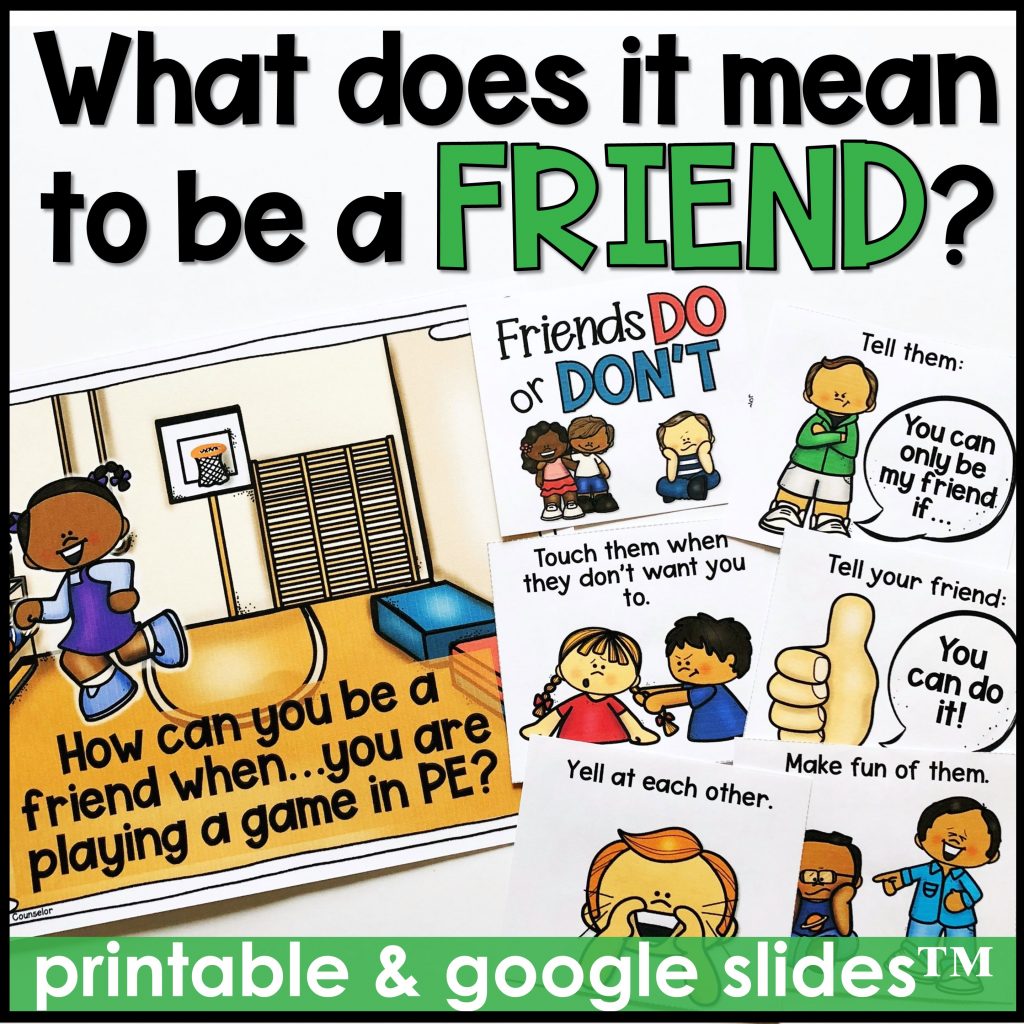
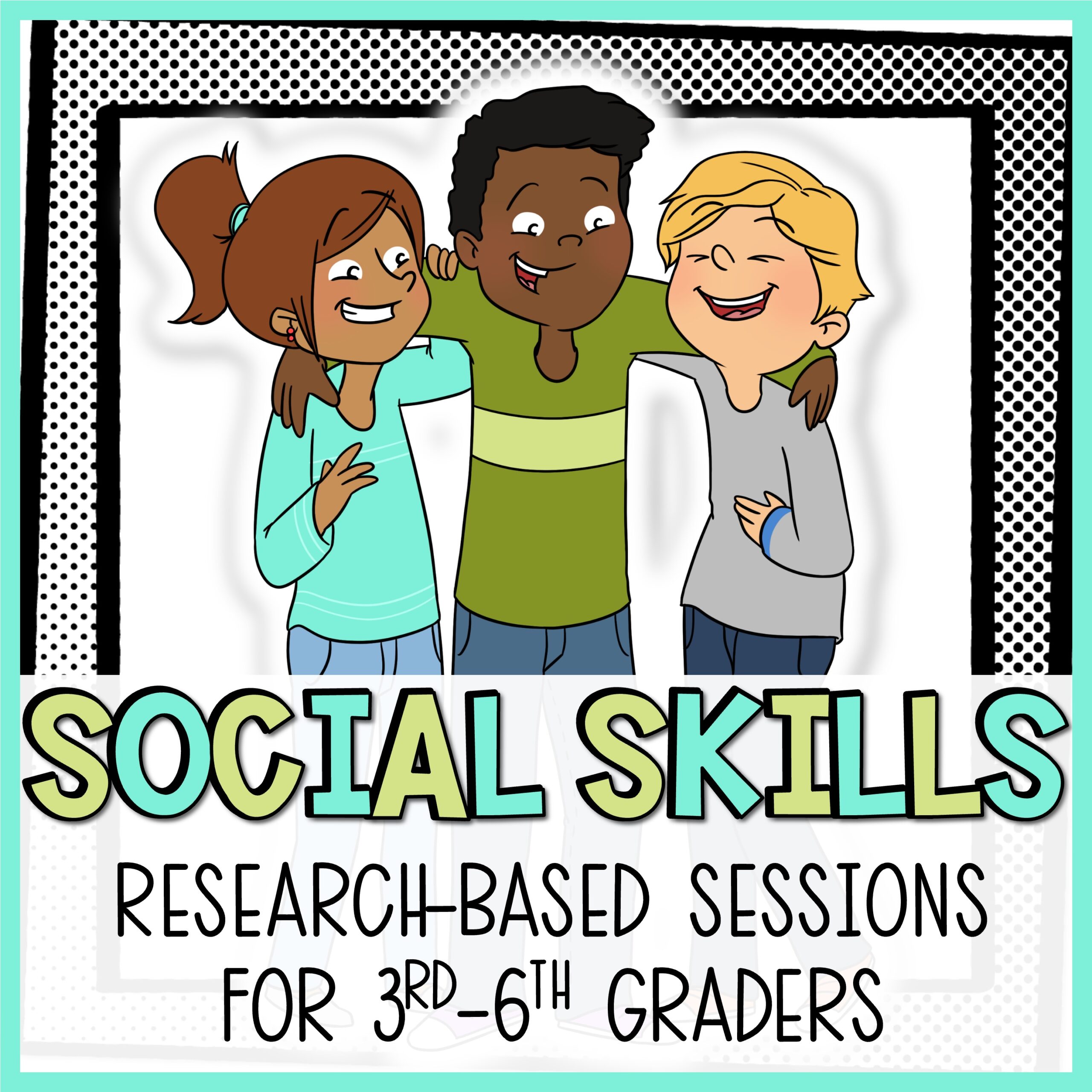
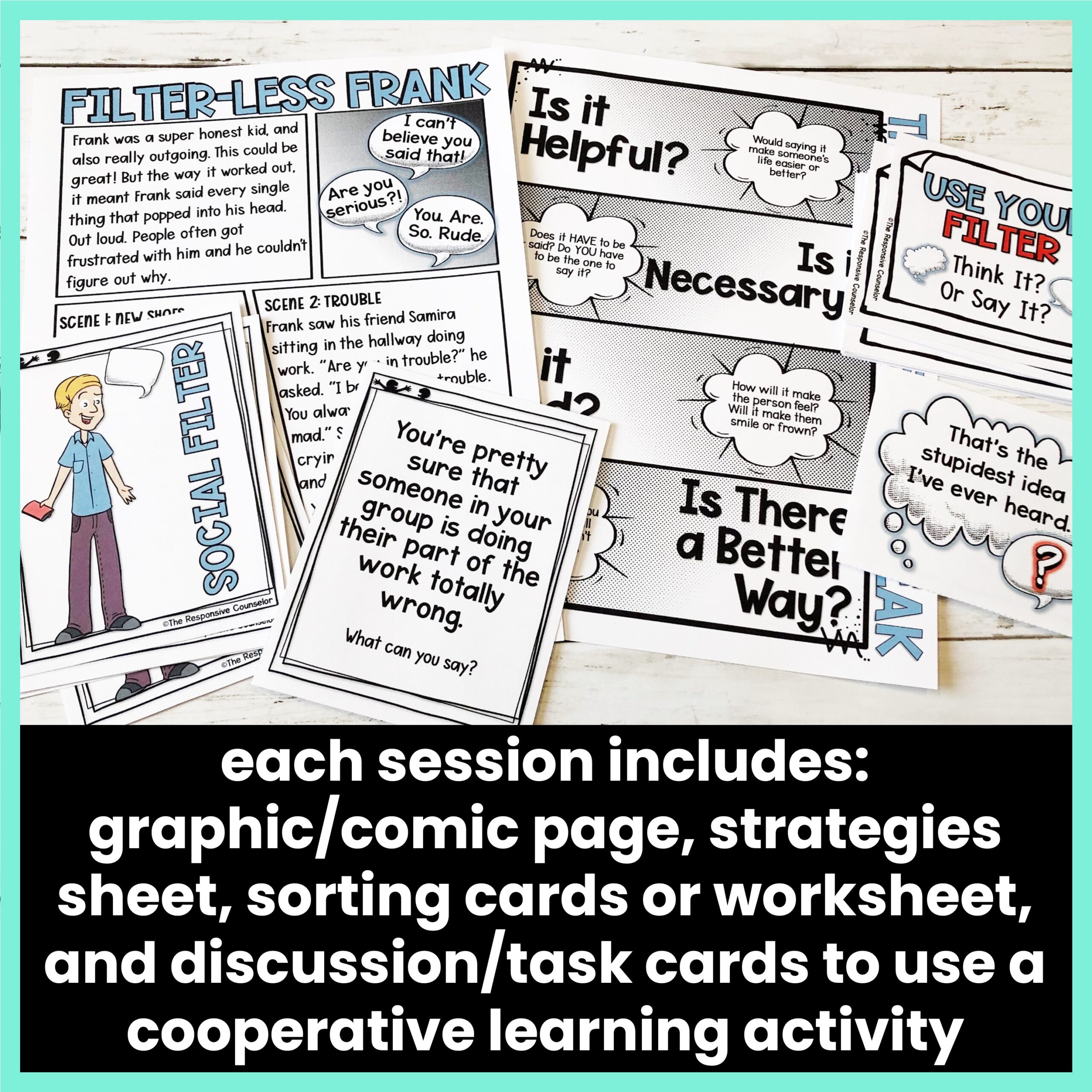
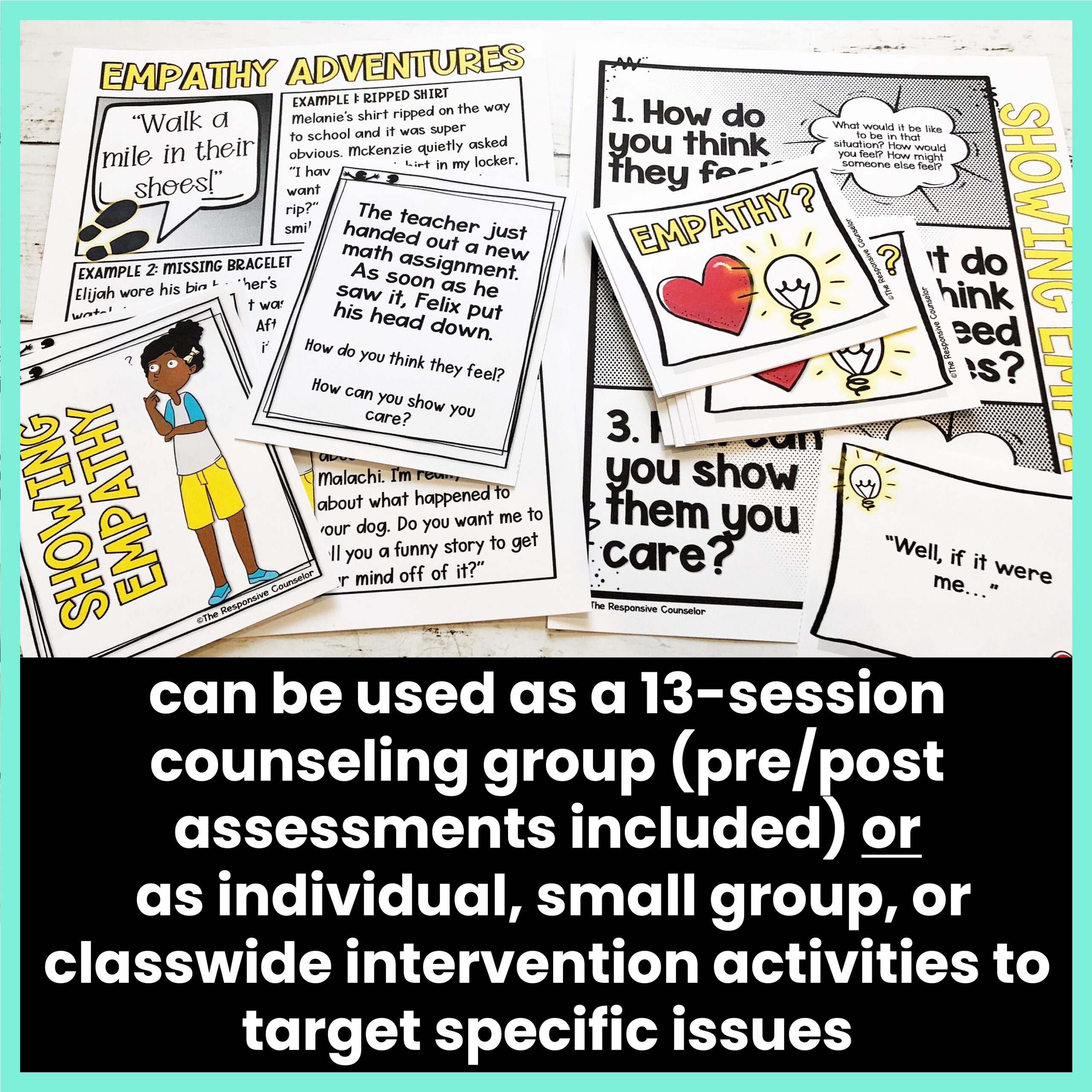
This social skills counseling curriculum for students in grades 3-6 focuses on positive communication and understanding others. It’s a good fit for students on the autism spectrum, students with ADHD, gifted students, or any students who struggle with social interactions. Each session opens with an engaging comic-style page introducing the topic, followed by a strategies sheet, sorting cards or a worksheet, and discussion and practice cards for a cooperative learning activity. The wording and scenarios are written to be relevant and developmentally appropriate for upper elementary students.
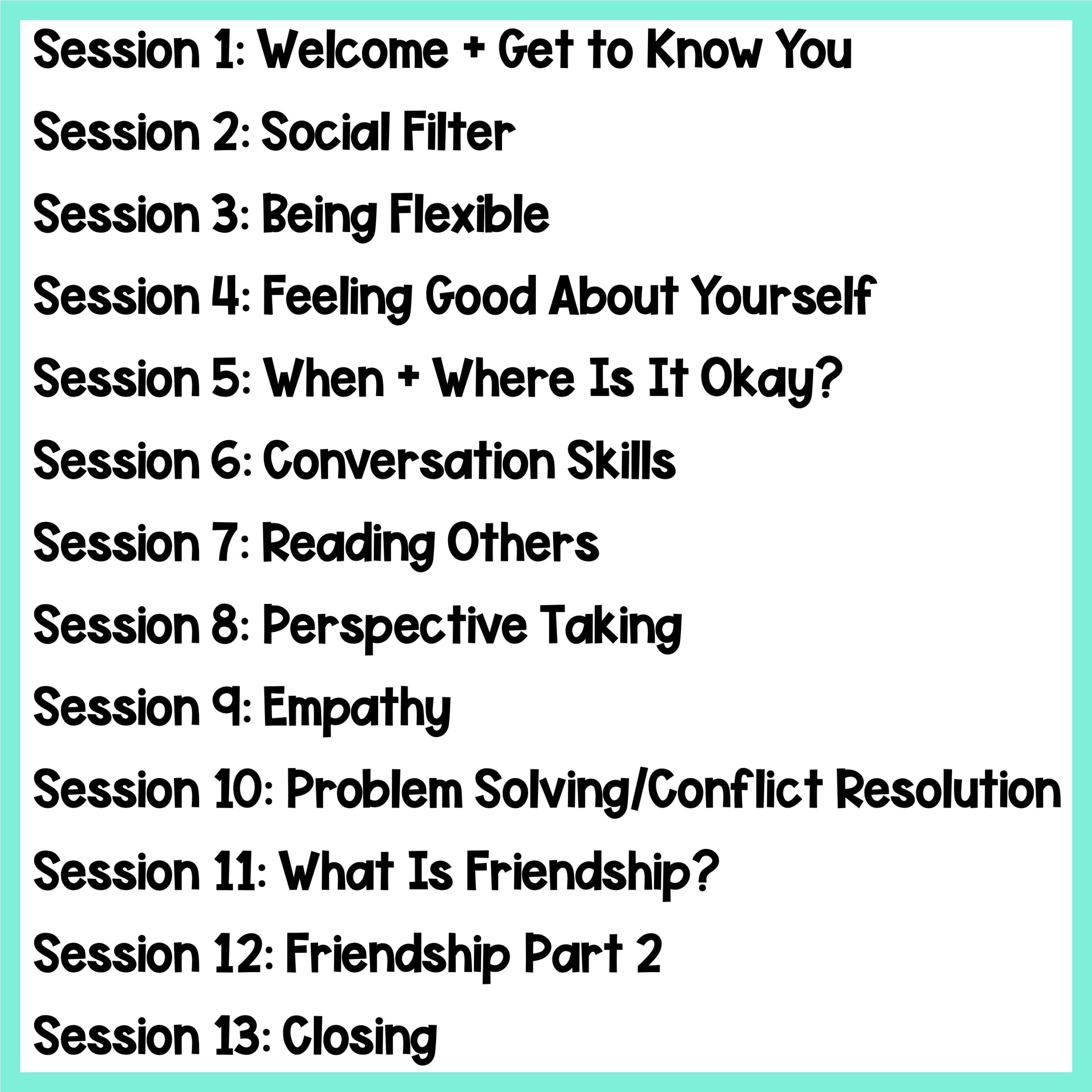
Sessions:
- Welcome and Get to Know You: welcome, assessment, expectations and finding commonalities
- Social Filter: “Filter-less Frank”
- Being Flexible: “Inflexible Izzie”
- Feeling Good About You: self-esteem and self-confidence
- When and Where Is It Okay?: “Wrong Time Will” and understanding appropriate time and place
- Conversation Skills: working through common conversation problems
- Reading Others: “Accidentally Annoying Andy” and reading social cues
- Perspective Taking: different opinions and seeing different explanations
- Empathy: “Empathy Adventures” and showing empathy
- Problem Solving and Conflict Resolution: handling problems with others
- What Is Friendship?: healthy friendship skills
- Friendship, Part 2: “Drama Donna” and friendship boundaries
- Closing: reflection
What’s included:
- Thirteen session plans with specific objectives and scripting for introducing and processing each activity, with flexibility to pick and choose sessions, reorder them or extend a skill topic to two sessions
- Social high/low and feelings check-ins and suggestions for adding more movement
- Google Slides versions of all sessions, for virtual counseling or a zero-prep option
- A caregiver info note (in English and Spanish), weekly teacher notes about reinforcement and student reminder notes
- Student and teacher pre/post assessments and a student journal
- A completion certificate
- Black-and-white versions of all pages
Standards:
- ASCA: Create positive and supportive relationships with other students; belief in development of whole self; use effective communication skills
- CASEL: Self-Management, Self-Awareness and Relationship Skills
Questions and answers:
What does research-based mean? The activities and ideology are based on what research (studies published in peer-reviewed journal articles) has found to be effective practices.
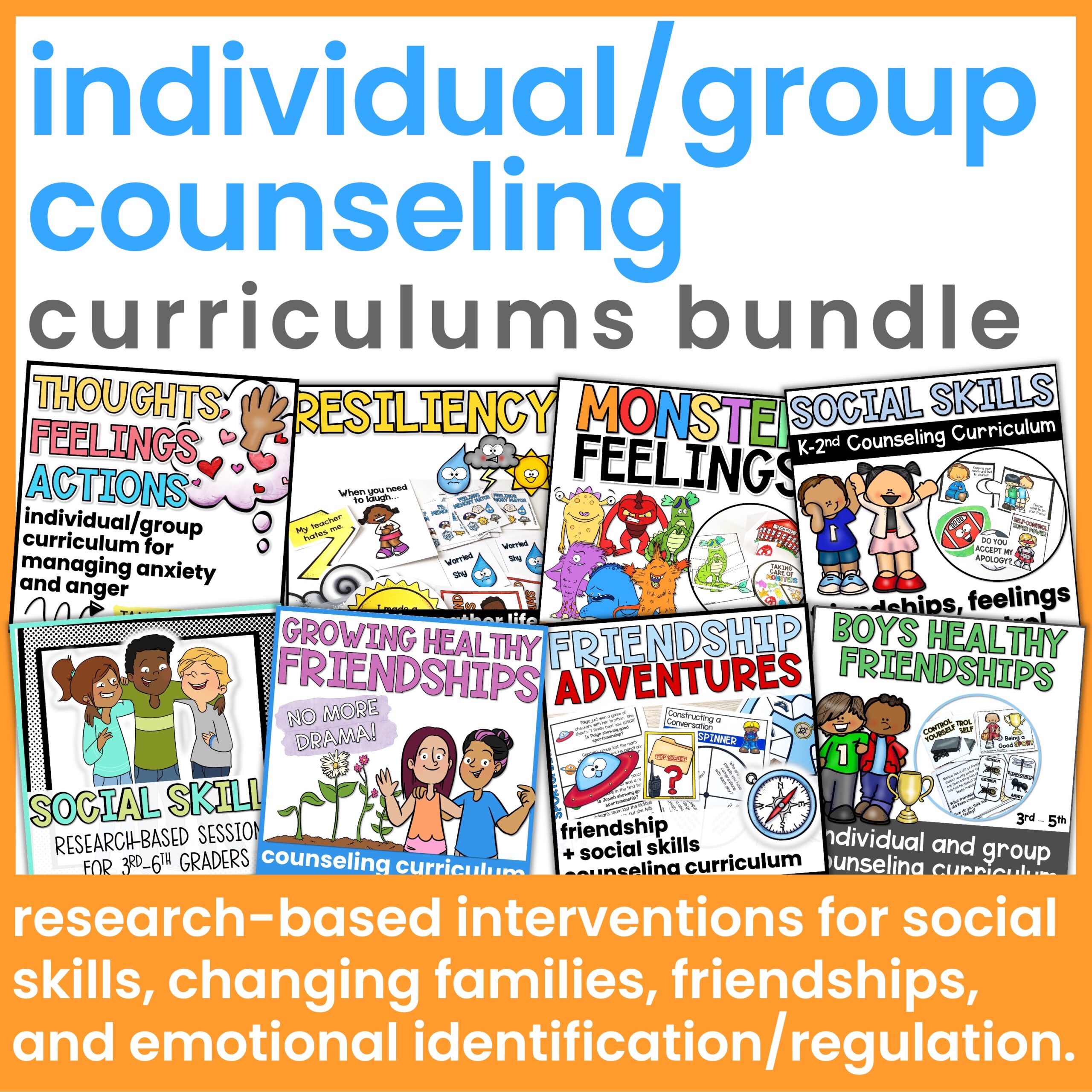
Is this for individual counseling or group counseling? It’s for both! This counseling intervention curriculum was designed to be used for MTSS tier 2 or tier 3 support. Sessions 2-12 can also easily be used as class lessons.
Take a closer look! The Preview Resource tab shows sample pages from this resource.


 Reload document
 Open in new tab