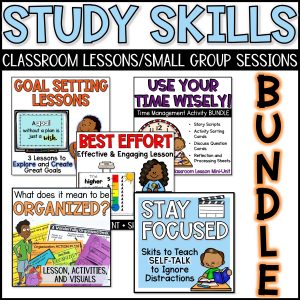
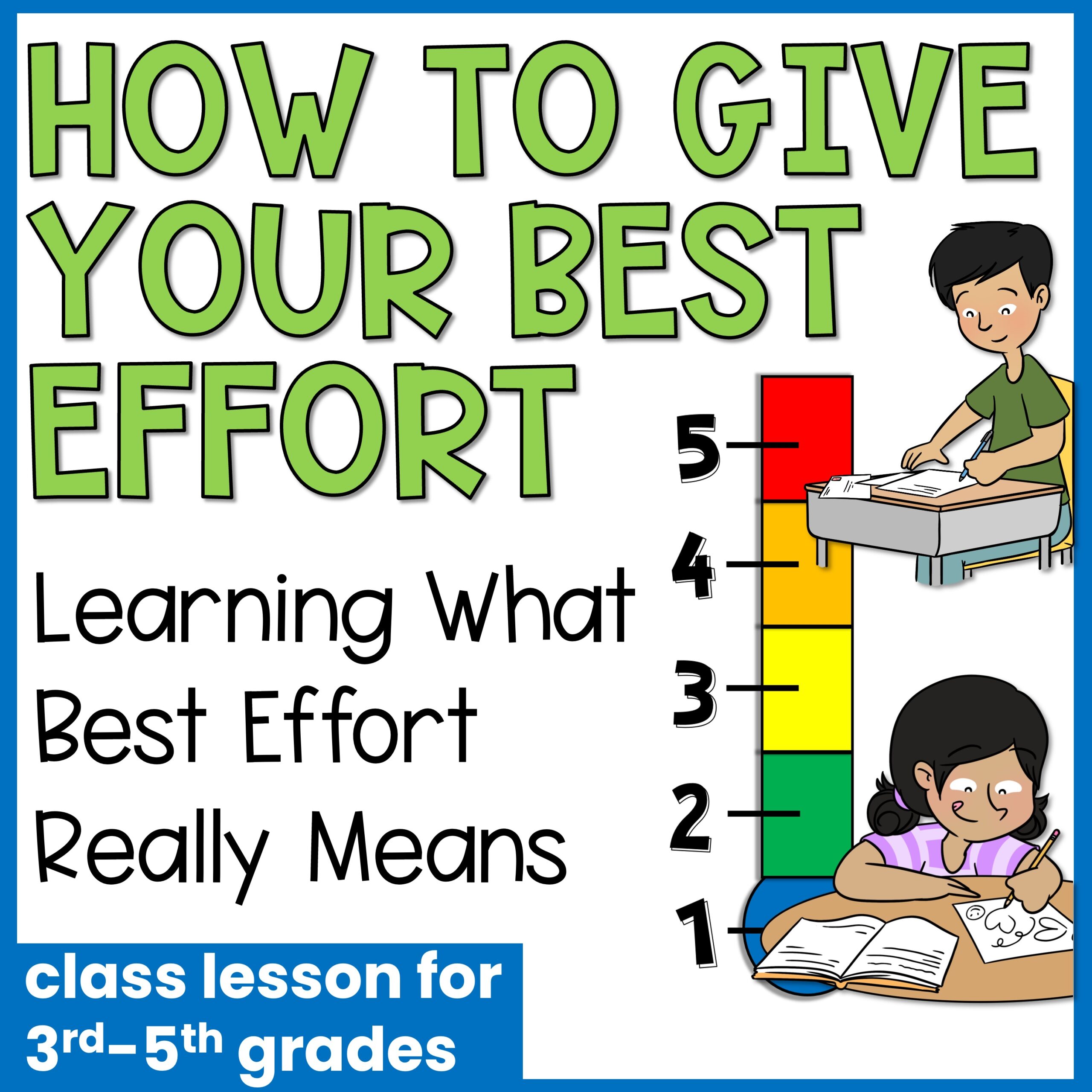
Telling students to “do your best” isn’t enough. They need to see what best effort actually looks like. This best effort lesson for grades 3-5 uses a 1-5 effort meter and example stories to show students the difference between low and high effort, in both behavior and finished work. It builds work ethic and perseverance in whole-class guidance or small groups.
What’s included:
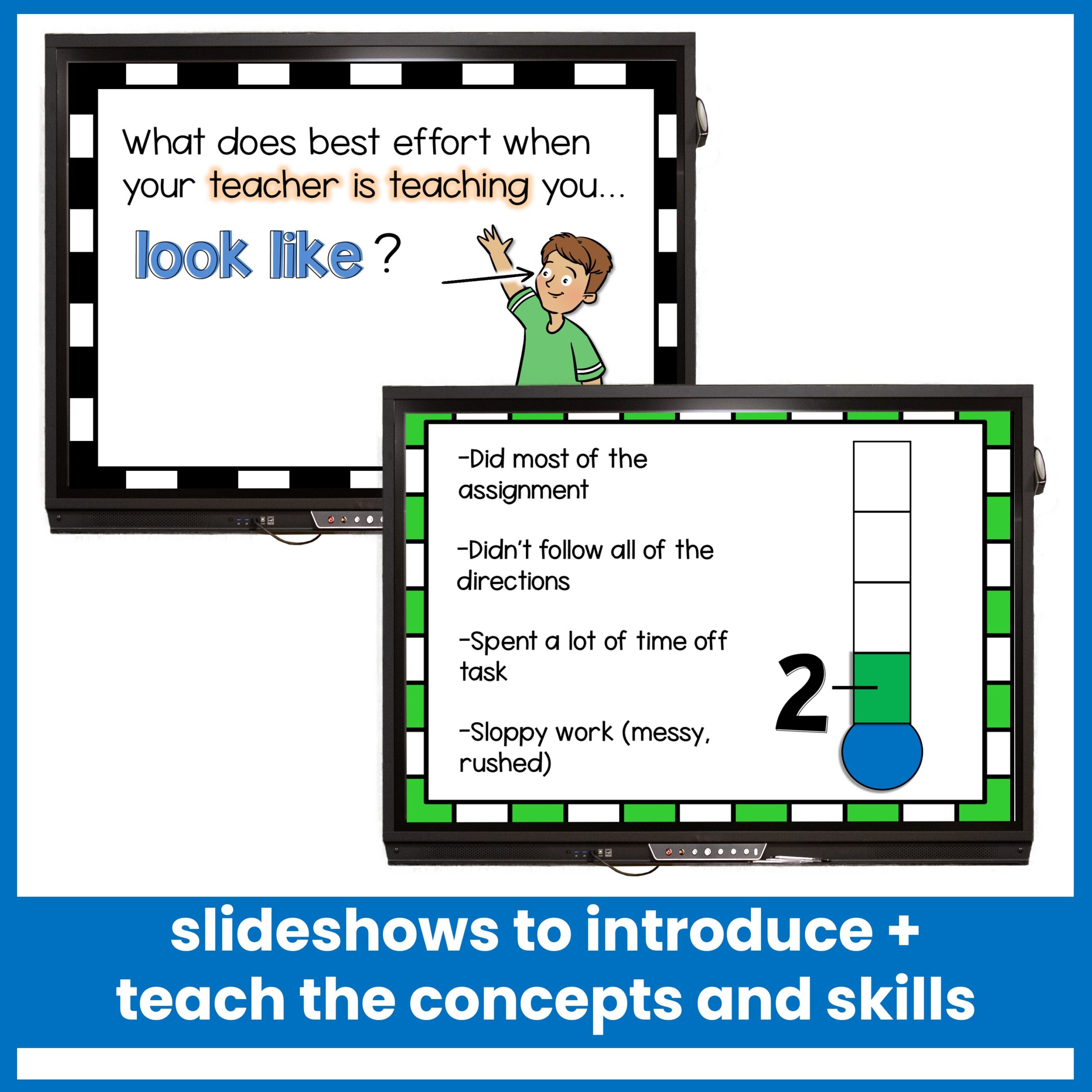
- Slideshow that teaches the effort meter and guides the lesson (works in PowerPoint on Mac or PC and in Google Slides)
- Interactive opener and anchor chart pieces for what best effort feels like, looks like and sounds like during teaching time and independent work time
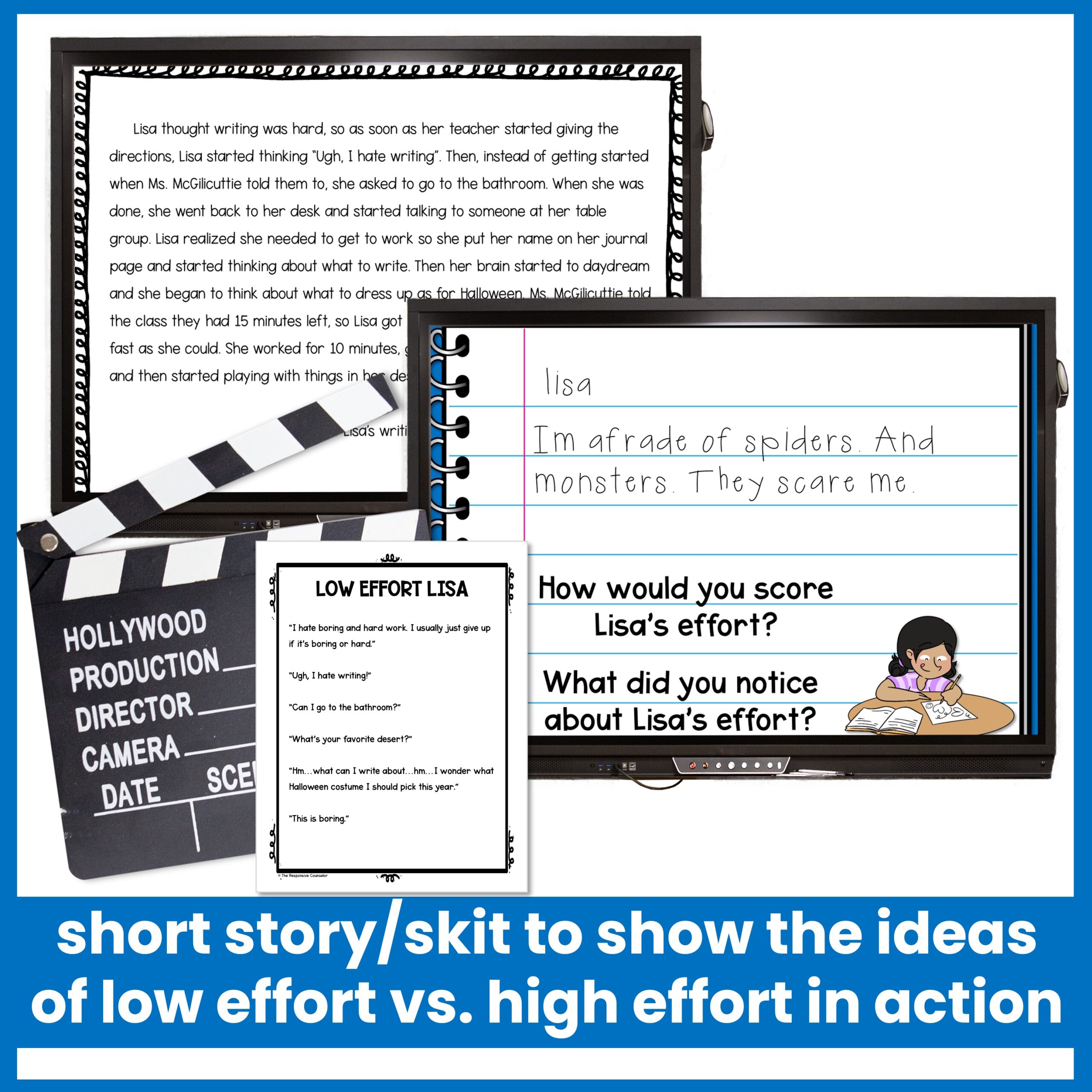
- Two character stories with writing samples, in slide form and as teacher scripts with character signs for acting out
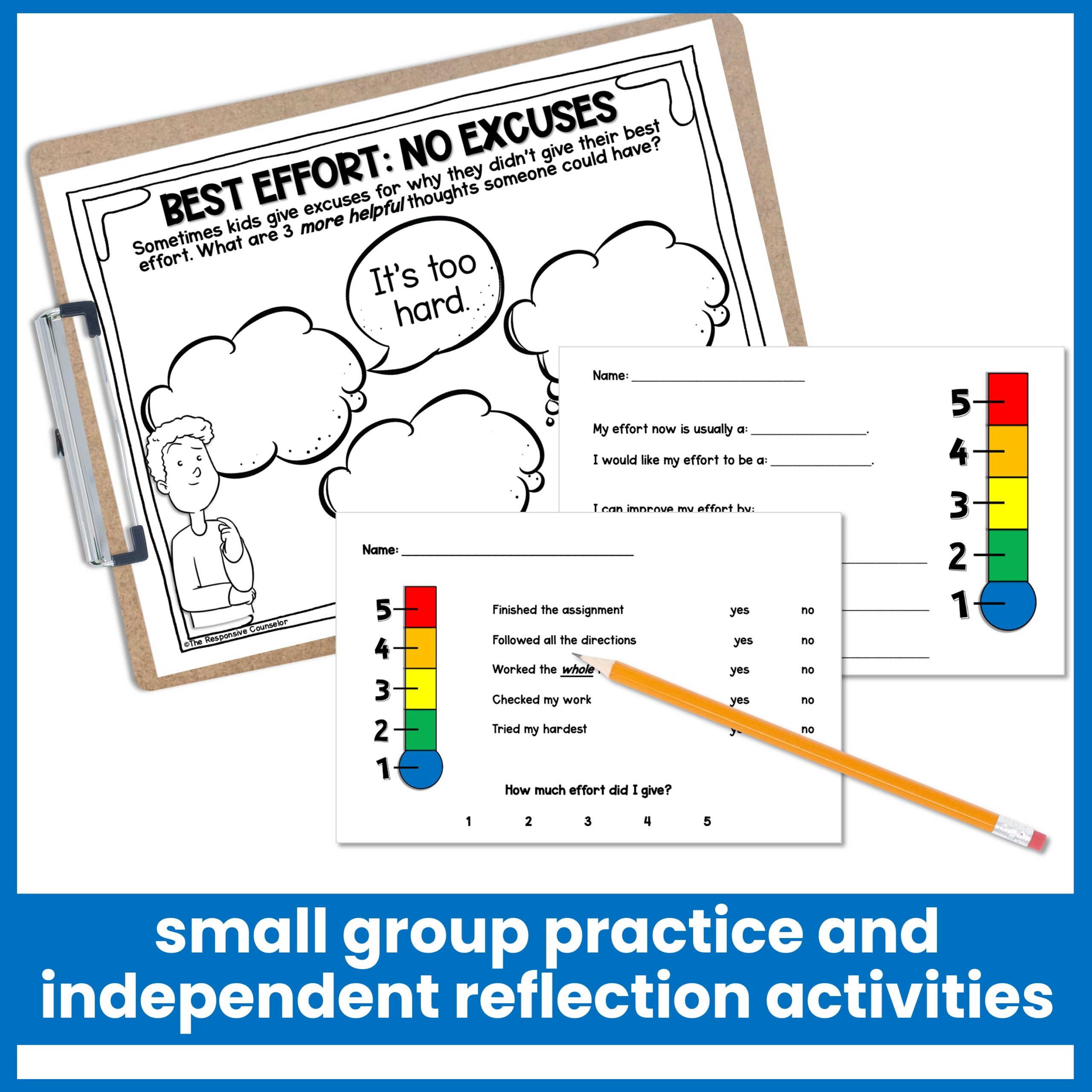
- Five “Best Effort: No Excuses” work pages for defeating the excuses that get in the way
- Two versions of effort rubric visuals
- Two self-reflection exit tickets: one for a specific assignment and one for overall effort
How to use it:
- Start with the opener to discuss what best effort looks like during different types of instruction
- Teach the effort meter, then have students act out the low-effort and high-effort stories and score each one
- In pairs or small groups, have students come up with self-talk to beat common excuses
- Hang the effort rubric in classrooms so teachers and students can use the same language
- Use the exit tickets with students in small groups or individual counseling who are working on work completion
Standards:
- ASCA Mindsets & Behaviors: B-LS 6 (High-quality standards for tasks and activities)
- CASEL: Self-Management
Take a closer look! The Preview Resource tab shows sample pages from this resource.


 Reload document
 Open in new tab